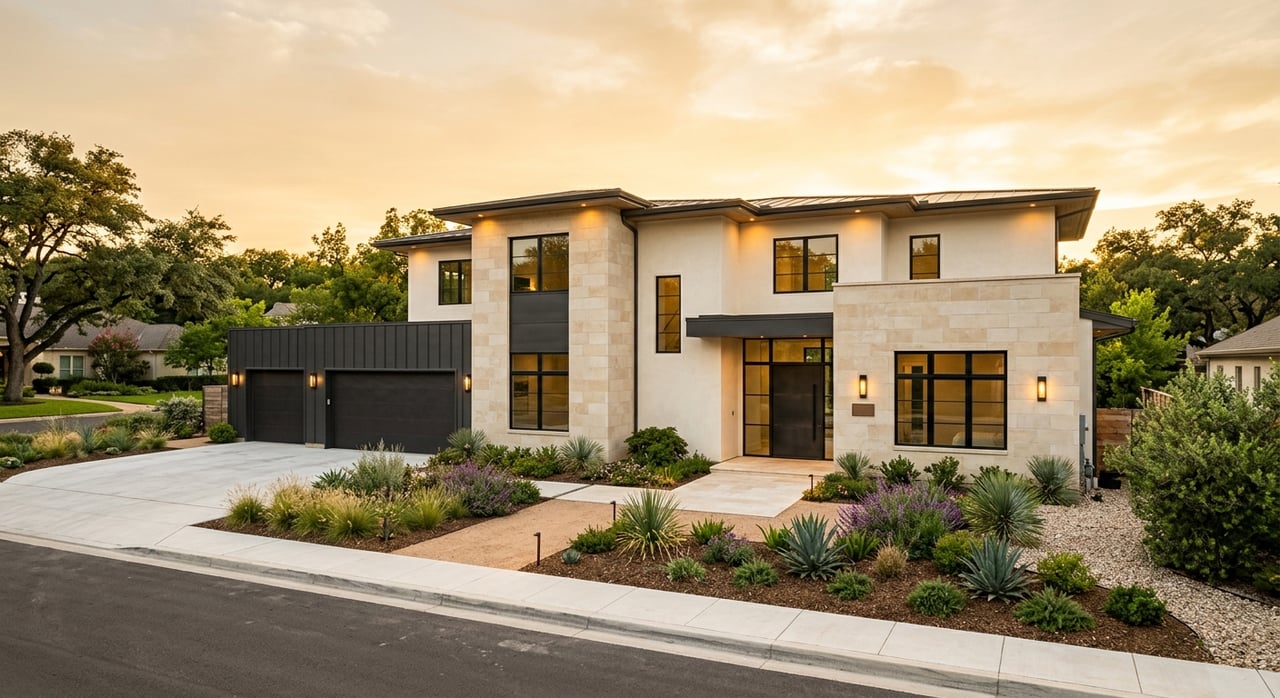
Making the Most of Builder Incentives in West Austin Suburbs
April 23, 2026
April 23, 2026
You do not always need a lower price to get a better deal on a new home in West Austin. In today’s market, many builders are competing with incentives like rate help, closing-cost credits, and design packages instead of cutting the base price. If you are considering a new construction home in places like Lakeway, Bee Cave, Dripping Springs, Spicewood, or nearby communities, understanding how these offers work can help you make a smarter decision. Let’s dive in.
The Austin-area market has given buyers more options than in tighter years. According to the Q1 2026 Central Texas housing report from Unlock MLS, the Austin-Round Rock-San Marcos MSA had 33,751 active listings and 5.5 months of inventory in Q1 2026.
That extra inventory does not mean every builder in West Austin is heavily discounting homes. It does mean many builders are using incentives to make monthly payments or upfront costs more manageable. In an Austin market presentation cited by Unlock MLS, builders noted that on a $500,000 home with a $400,000 mortgage, moving a rate from 6.75% to 4.75% could feel similar to a major price cut in monthly payment terms.
Builder incentives in West Austin suburbs are rarely one-size-fits-all. They often depend on the community, the homesite, the construction stage, and whether you are choosing a quick move-in home or building from the ground up.
In Lakeway, incentives can be selective rather than widely available across an entire community. For example, David Weekley’s update on The Point at Rough Hollow notes limited opportunities priced from the $700s, along with Austin-area flex dollars that may be used toward Design Center selections or closing costs.
In Bee Cave, incentive messaging can be more payment-focused. Ashton Woods in Provence advertises a 1% below-market rate lock and up to $80,000 in savings on select homesites, which shows why it is so important to read the details behind the headline number.
In Dripping Springs and Spicewood, incentives often line up with inventory that is already under construction or nearly complete. David Weekley’s Headwaters announcement highlights both build-from-scratch opportunities and move-in ready homes.
That matters because the best incentive may depend on your flexibility. If you are open to a quick move-in home, you may find stronger savings or financing help than you would on a fully custom timeline. In Spicewood, the same pattern applies to limited opportunities with ready-soon inventory.
Even though Georgetown is outside the immediate West Austin core, it offers a useful comparison because some builder incentives there are very clear. Ashton Woods at Berry Creek Highlands advertises a 1% below-market rate lock and up to $100,000 in savings on select homesites, while other area builders have promoted rate-reduction funds and flex-dollar programs.
The lesson for West Austin buyers is simple: advertised savings can take different forms. A rate lock, closing-cost credit, and design allowance may all be valuable, but not in the same way for every buyer.
Before you compare communities, it helps to know what you are actually being offered.
A rate buydown lowers your mortgage interest rate, which can reduce your monthly payment. This can be especially appealing if you want payment relief right away and expect to keep the home long enough to benefit from the lower rate.
Closing-cost credits reduce the amount of cash you need at closing. According to Fannie Mae guidance on mortgage closing costs cited in the research, closing costs often run about 2% to 5% of the mortgage amount, so this kind of incentive can be meaningful if preserving cash is your top priority.
Design-center credits can help if you want to personalize finishes and features. These are most useful when the builder’s included features do not fully match your preferences and you want help covering upgrades that matter to you.
These terms are often confused, so it is worth slowing down here. The Consumer Financial Protection Bureau explains that lender credits can lower your upfront closing costs in exchange for a higher interest rate, while discount points let you pay more upfront to lower your rate.
That is why a shiny offer should always be reviewed in the context of your full loan estimate, not just the advertised rate.
A builder incentive is only helpful if it fits your timeline, financing plan, and the specific home you want.
A large advertised savings number may sound great, but you need to know what it really changes. Does it lower your monthly payment? Reduce your cash to close? Cover upgrades you would have purchased anyway? Or apply only to one homesite you do not actually want?
The CFPB recommends comparing the same loan with and without credits or points across multiple timeframes. That approach helps you see whether a short-term savings offer still makes sense if you keep the home for several years.
Some offers only apply if you use the builder’s affiliated lender or close within a certain time window. David Weekley’s Austin-area promotion details note that buyers must present the promotion before signing, the offer is tied to a specific period and lender, and it may not be combined with other financing promotions.
That does not make the offer bad. It simply means the terms matter just as much as the dollar amount.
Builders may structure value in very different ways. One community may advertise flex dollars for design selections, while another may focus on financing support or homesite-specific savings.
You will want to ask what is included in the base price and what counts as an upgrade. That distinction can change the real cost of the home more than the incentive itself.
If you are touring new construction in West Austin suburbs, keep this checklist handy:
These questions can quickly show whether a promotion is truly useful or just good marketing.
It is easy to get caught up in a polished model home and a strong incentive package. Even so, you should still protect yourself during the contract process.
The CFPB advises buyers to make the contract contingent on financing and a satisfactory inspection, and it notes that you do not have to use the builder’s affiliated lender. The agency also recommends asking when an upfront builder deposit can be returned.
The CFPB also recommends an independent home inspection even for new construction. A new home can still have issues, and your contract terms matter if something significant comes up.
West Austin suburbs are not all the same, and builder strategy can vary a lot between Lakeway, Rough Hollow, Bee Cave, Dripping Springs, and Spicewood. One community may have limited inventory and targeted incentives, while another may be more aggressive on quick move-in homes.
That is where local guidance can make a real difference. When you compare builder offers against resale options, outside lender quotes, and contract terms, you can focus on your true net cost and your long-term fit, not just the sales presentation.
If you are considering a builder purchase in Lakeway, Bee Cave, Dripping Springs, Spicewood, or another West Austin suburb, working with an experienced local advisor can help you compare incentives clearly and move forward with confidence. When you are ready for personalized guidance, connect with Sarah McAloon for a one-on-one conversation about your options.
Stay up to date on the latest real estate trends.


Ready to turn your real estate dreams into reality? Contact Sarah McAloon today for a stress-free and personalized home-buying experience!